
2026 Virginia Marine Debris Reduction Plan
Thank you to all of the partners who have taken on actions within the Plan to assure cleaner waterways in Virginia.
Virginia Marine Debris Reduction Plan 2026-2030 Overview
The 2026-2030 Virginia Marine Debris Reduction Plan (VMDRP) provides a collaborative roadmap for preventing and reducing marine debris and its impacts on Virginia’s waterways, wildlife, communities, and economy. In 2025, the VMDRP was updated with input from federal, state and local governments, nonprofits, industry, natural resource managers, academia, regional organizations, and other stakeholders. It was prepared by the Virginia Coastal Zone Management Program and Clean Virginia Waterways.
Why Marine Debris Matters
Marine Debris is a persistent environmental and economic challenge in Virginia. Between 60%-80% of all marine debris originates from land based sources and over 80% of all marine debris is plastic. The impacts extend beyond the environment. Marine debris can negatively impact navigation and public safety, tourism and recreation, and creates costs for communities, businesses, and governments.
What the VMDRP Does
The 2026-2030 VMDRP builds on more than a decade of coordinated marine debris reduction efforts in Virginia while identifying new opportunities for collaboration, research, prevention, and policy improvements.
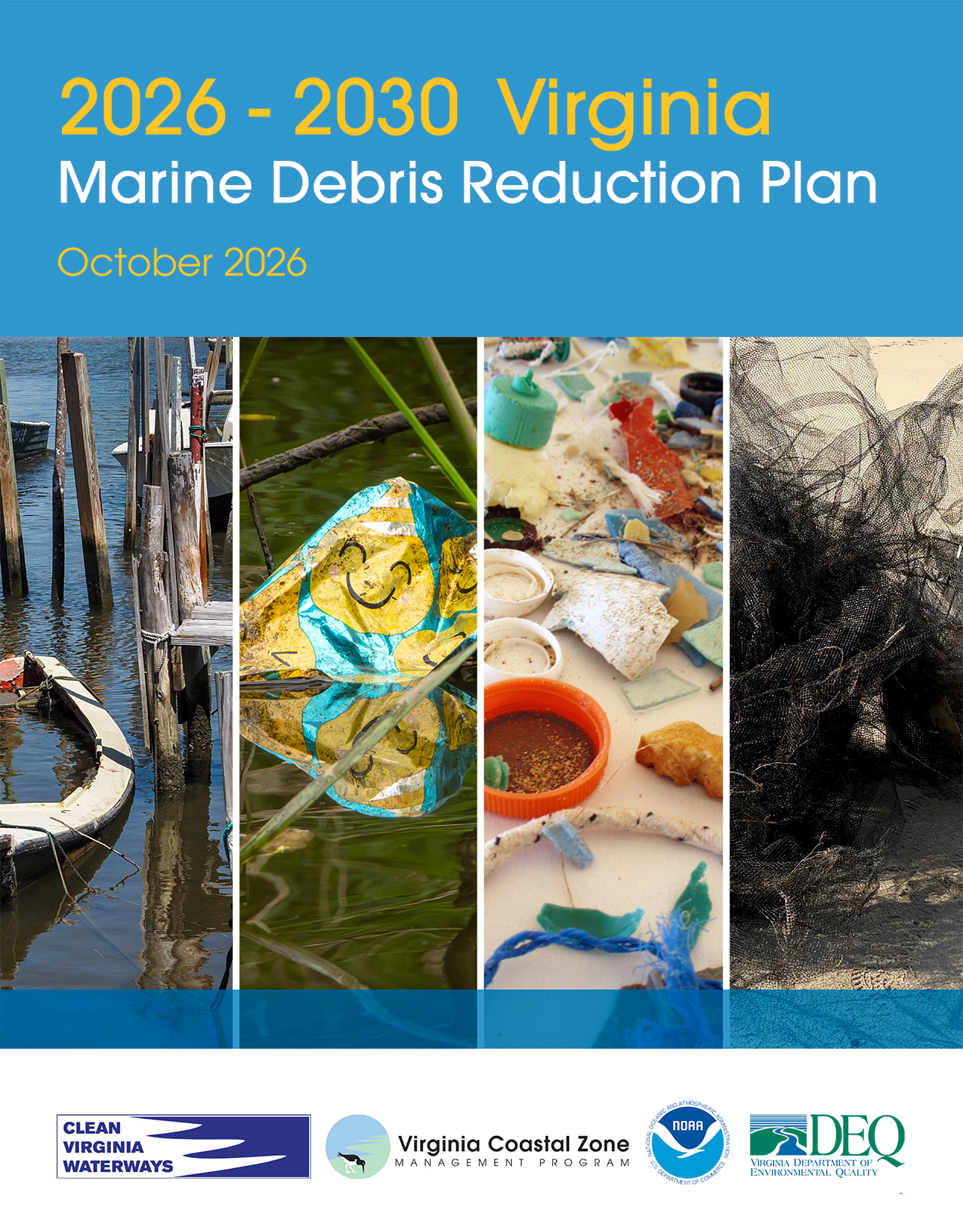
The VMDRP is organized around the 4 main types of Marine Debris
1.Understand Prevent and Mitigate Consumer Debris (mostly single use plastic)
Actions focus on understanding the source and impact of consumer debris and reducing waste before it reaches waterways.
Priorities include:
Expanding public and school education and outreach
Developing audience-informed prevention campaigns
Improving litter and marine debris data collection through cleanup events and monitoring
Understanding policy options to reduce plastic pollution and how to implement them in Virginia
2.Understand, Prevent, and Mitigate the Impacts of Derelict Fishing and Aquaculture Gear
Actions focus on reducing derelict fishing gear, ghost fishing, reducing the occurrence of lost aquaculture nets, and
other fishing related debris. Priorities include:
Expanded collection and disposal infrastructure
Maintaining and expanding Virginia’s fishing line collection sites
Working with the commercial fishing industry to identify solutions
Increased community outreach to engage recreational anglers
3. Understand, Prevent, and Reduce the Impacts of Microplastics and Microfibers
Actions address growing concerns about microplastics through research, monitoring, education, and policy engagement.
Priorities include:
Research and monitoring of microplastics in waterways and drinking water
Communicating economic, health, and environmental impacts to policy makers
Identifying policy approaches to reduce microplastic and microfiber pollution
4. Prevent and Mitigate the Impact of Abandoned and Derelict Vessels
Actions are focused on increasing prevention and removal of abandoned and derelict vessels from Virginia’s coastal
and inland waters. Priorities include:
Continued outreach to educate stakeholders about ADVs
Update the GIS based inventory of ADVs in Virginia
Research Vessel Turn in Programs in the United States. Create and draft framework and cost analysis for a pilot VTIP program
Collaborative Implementation
The VMDRP is designed to be implemented by a network of partners rather than a single organization or agency. Actions identify partner organizations and provide opportunities for governments, nonprofits, businesses, researchers, educators, and communities to contribute.
The VMDRP connects marine debris work to other Virginia initiatives including resilience planning, sea turtle and marine mammal conservation and the Commonwealth’s Solid Waste Management Plan.
Measuring Success
Success will mean less plastic pollution entering Virginia’s waterways. This will entail adoption and implementation of policies, enhanced systems that prevent and manage marine debris, better data to guide decisions, and broader collaboration across Virginia
The VMDRP provides a framework for turning research and shared priorities into measurable action that prevents plastic pollution, improves education, removes derelict fishing gear and abandoned vessels, addresses microplastics, strengthens policy, and lays a foundation for the infrastructure needed to keep plastic pollution and marine debris out of Virginia’s communities and waterways.
Visit the 2021-2025 VMDRP Progress Report to see work that has been completed or is in progress from the previous Plan.
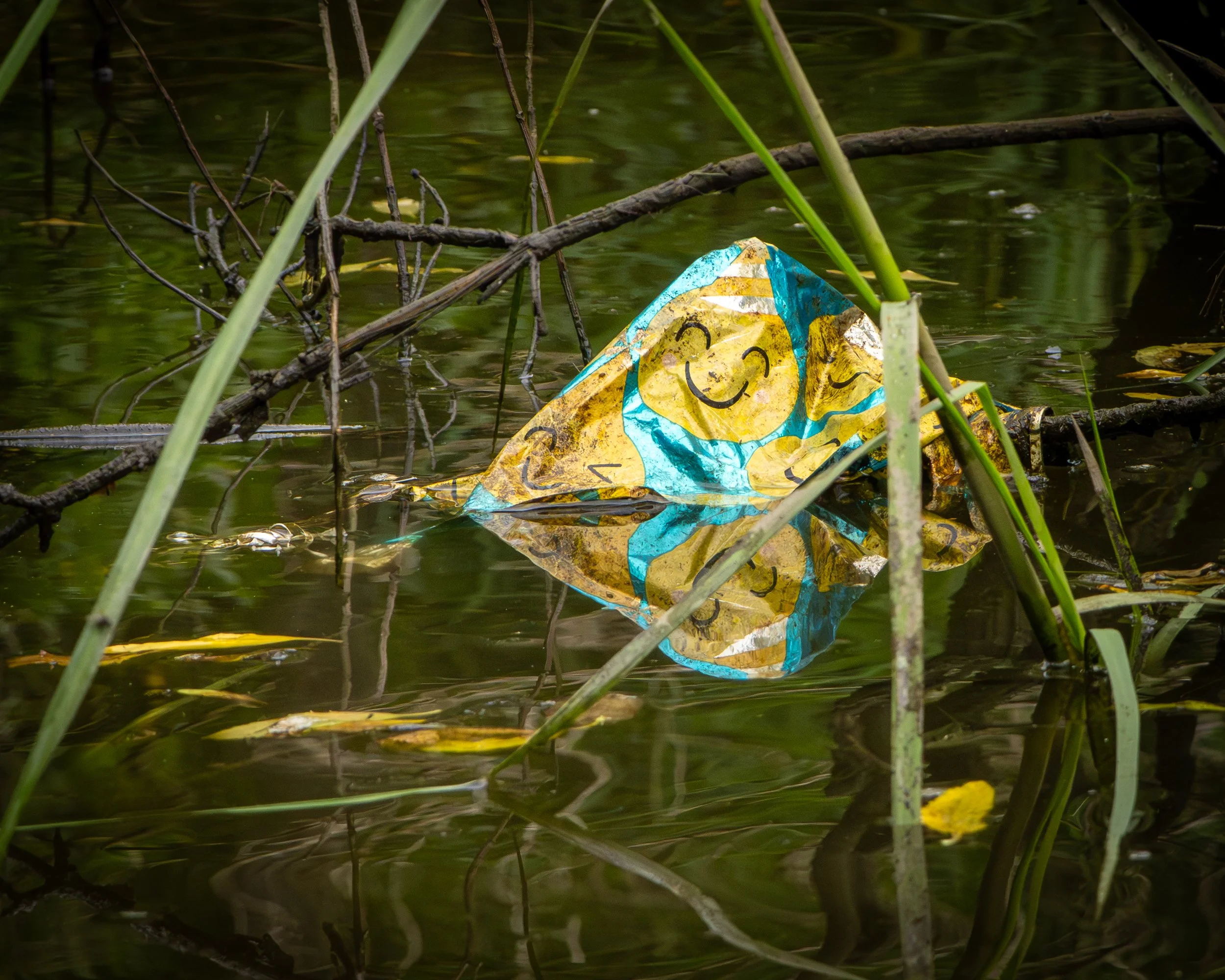
Image by Sue Mangan
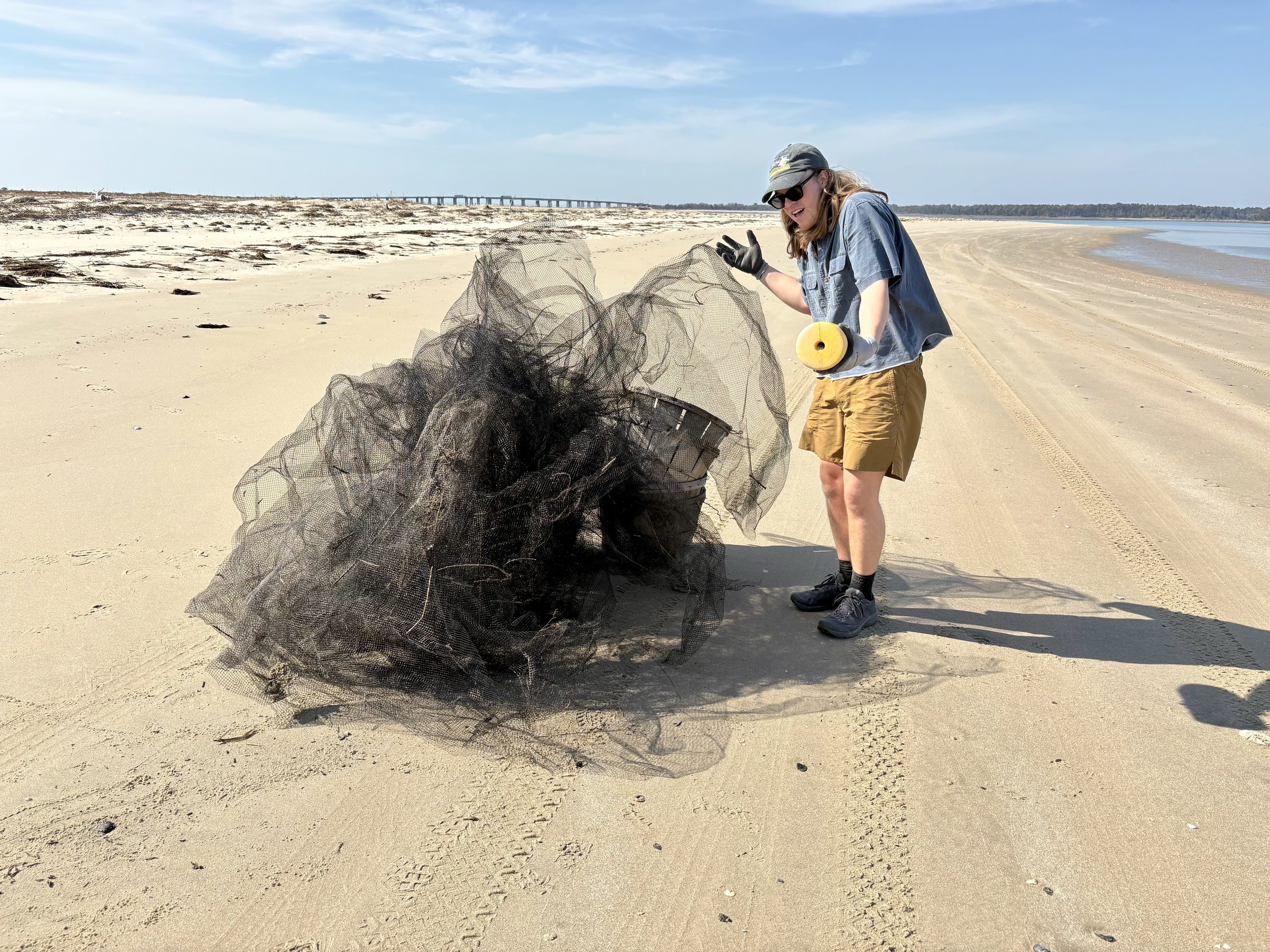
Image by Dylan Mason, Lynnhaven River NOW
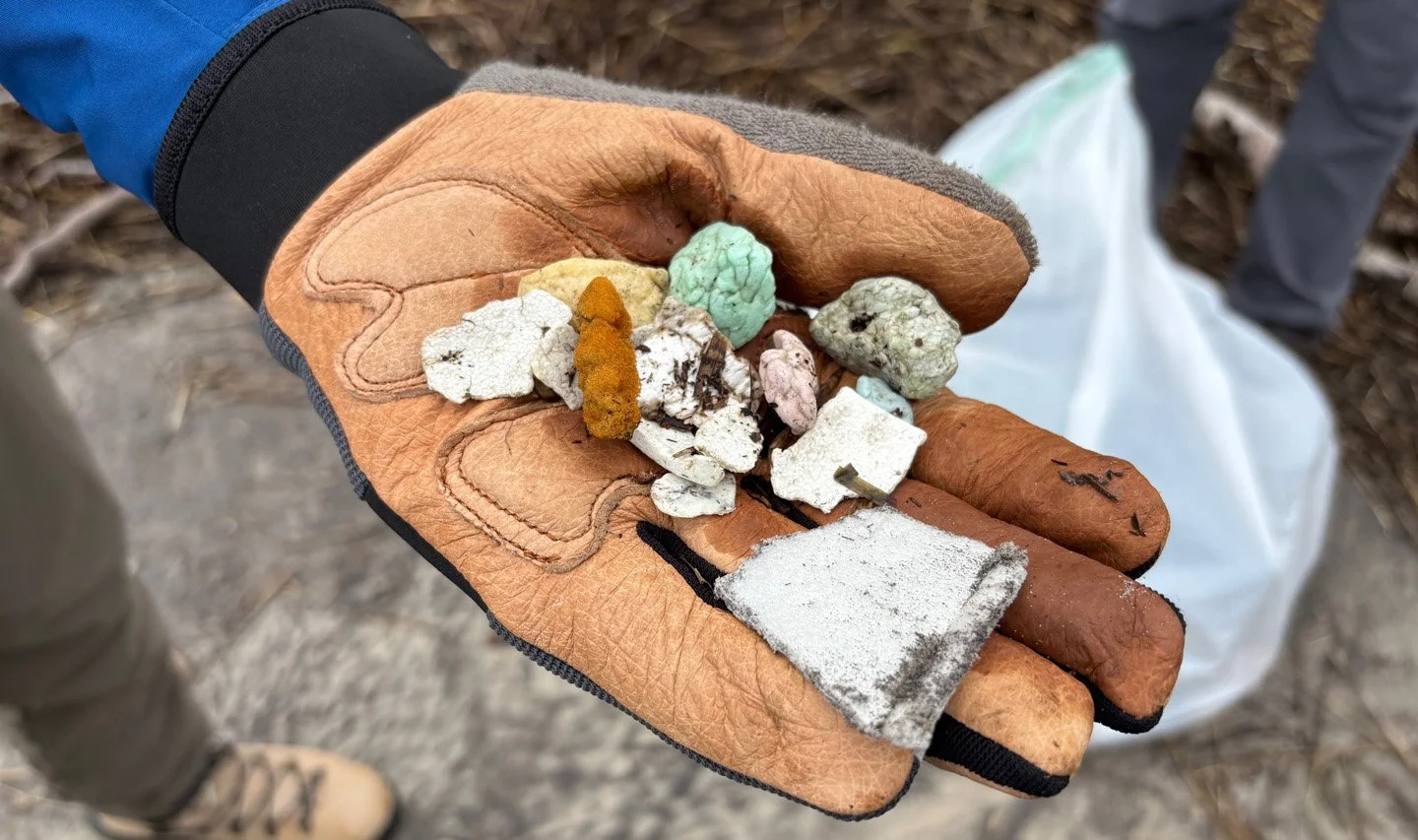
Image by Christina Trapani, CVW
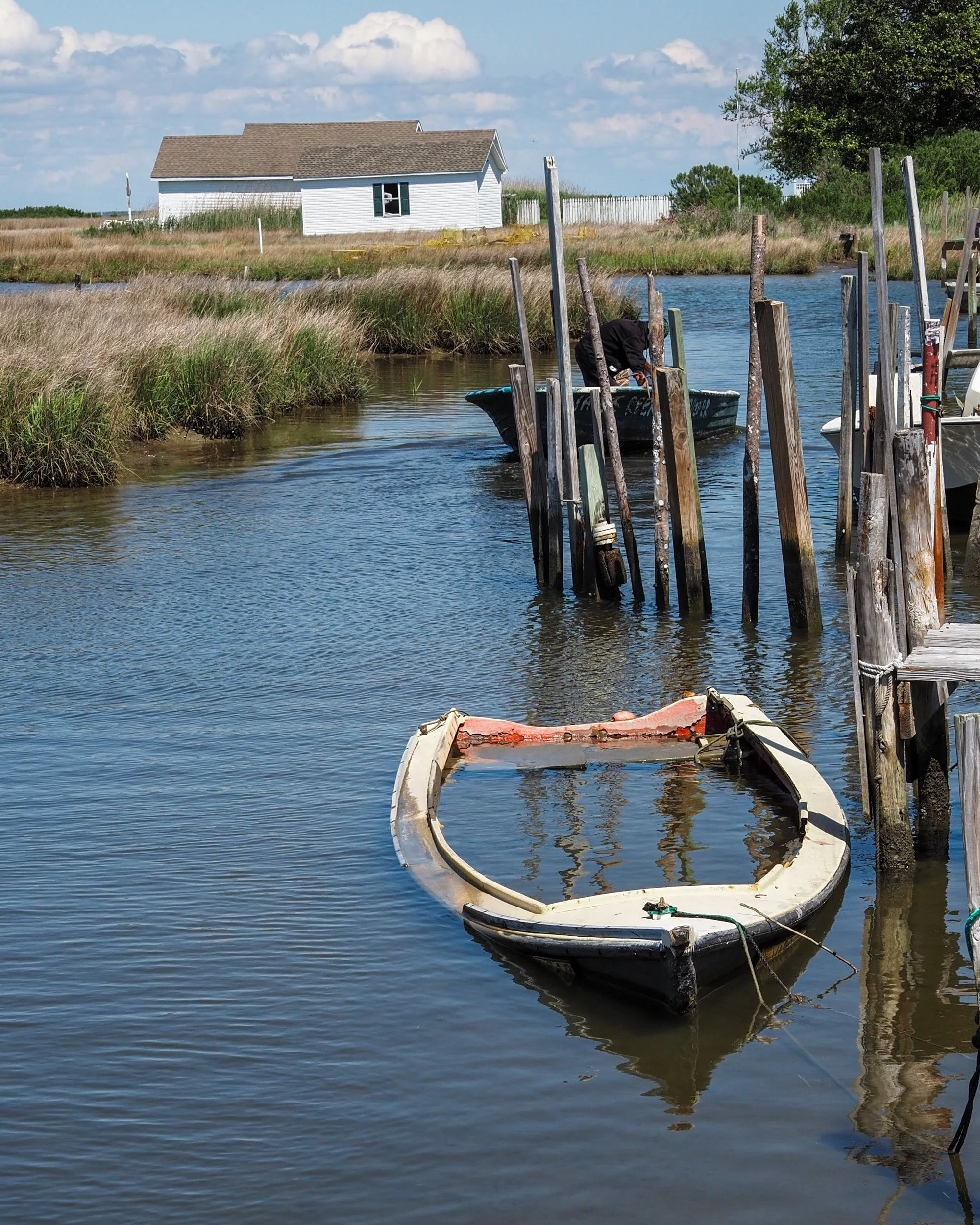
Image by Sue Mangan